






 Support our Stories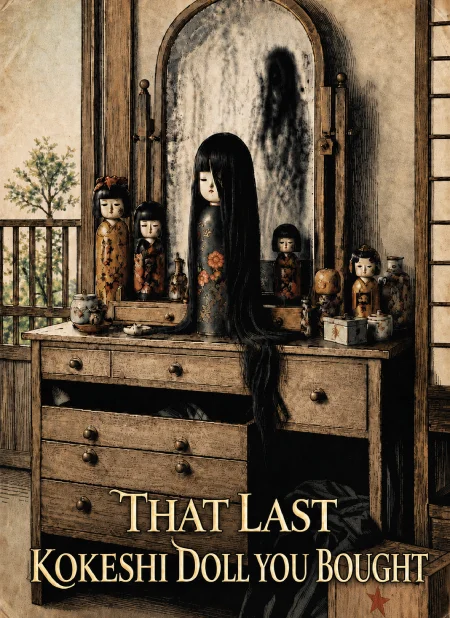

 27 min read
 Part 1
Yasuko, do not hate me, let me explain. Yes, I got rid of them. I could not bear it any longer. The way they gathered on your dressing table. Gazing down upon me. Reminding me of all the times I took you for granted. The times I complained about the space they took up, not just on the dresser, but in my life, in our lives. It’s true, I confess it. Yet, in my defence, I promptly changed my mind after I had moped about the house, realizing how wrong I’d been. I somehow knew if I got those dolls back, you would return to me.
Please, sit here with me. Let me explain. How warm you feel. Please, do sit.
Getting rid of them was hasty, I can admit this in hindsight. But the way their eyes followed me around the room. I could not sleep. I would lie here, on our bed, a knot of tension wedged between my shoulders, scratching at a maddening sore on my leg, unable to think clearly or relax. This on top of my grief. And on top of this, those dolls glaring at me.
I tried turning them around, so they faced the mirror. How stupid of me, yet I was in such a state. I dare not even rest my eyes. There were times I began to weep from grief. Countless times really. But their eyes were fixed so intently on mine, even the merest haze of tears struck me as perilous. When I’d finished restaging the dolls, I stepped back and only then realized my folly. They still surveyed the room, through the mirror sitting atop the dressing table, their dead eyes finding mine wherever I went.
I know what you are thinking. These dolls were a constant reminder of my guilt. The porcelain geisha in the red kimono, the one with real human hair perfectly sculpted into wings, the topknot held in place by a gilt kanzashi crown. A rare vintage doll, but damn, her glass eyes are so lifelike. There’s that doll in the plain, long white katabira, unlined and utilitarian, so modest-looking. Quite clearly the good wife and wise mother, until her gaze grew suddenly defiant. She’d been my favourite before then.
Such a stark contrast to the modern-looking girl, with her urban fashions, moga hairstyle, and condescending glance. How cheap she looks, and Western, but I checked online, and she is actually a collector’s piece.
Then there were the carved kokeshi dolls you loved the best. The little family, nested together on a single log slice, their bulbous heads sprouting out like mushrooms. Quite witty, but out of keeping with the realism of your other dolls.
The one with a spiritual theme who knelt on a Zen cushion, her head bowed in prayer. She was cut from a fallen ginkgo tree by the wood artist we visited in Osaka. Even I took interest in this piece, the way its winding copper veins animated her. And, as I advised you at the time, the piece would likely increase in value, particularly given the artist’s age and popularity.
Then there is the one you restored yourself with wood paints and varnishes. Of little value, true, yet how clever and talented of you. And not to forget that last kokeshi doll you bought the day you visited your sister in the East.
That last doll never did seem right. Such wild and riotous long, dark hair, like an onryō, or an old hag from a kaidan story. Her untidy hair fell like an endless stream, flowing seamlessly into the long stem of her black dress, until she towered over the other dolls like a dark flower. It covered half her face too, though alas not her eyes, which were squeezed shut into deep frown lines. And yet, I swear, of all the dolls, hers was the most piercing gaze.
And the way she felt when handled. Cold-hearted. Yet her carving was exquisite, her paintwork exemplary. I had a name for her, you know. I called her the rich widow. For it occurred to me that her darkness masked her value.