

 Support our Stories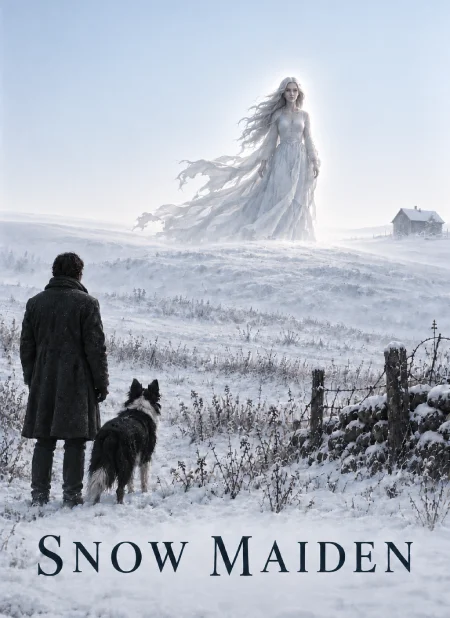

 22 min read
 Part 1
The dog knew before he did.
Stopped dead and gave a low growl that thrummed through its lead like a live wire. It wasn’t the sort of rumble reserved for foxes or strangers. No, this was something older. Something the collie had never encountered before, yet its instincts were telling it right plain it did not belong there.
“Pack it in,” its master snapped.
The dog ignored him. It stood rigid, ears pricked, staring across the white field toward nothing at all.
Then the hillside exploded. Snow burst upward with such force that the feller stumbled back a pace. One moment the land lay flat and silent beneath its winter blanket. The next there came a flash of white and a roar like the sky splitting clean open.
Well, that dog began barking fit to wake the dead from their beds.
When the snow settled, there was a hill where no hill had been before. And coming down it was a woman.
She always arrives the same way, you see. Some folk know her as the Snow Maiden. Others call her the Ice Witch, or the Ice Queen. Doesn’t much matter what name you put on her. They’re all the same creature. Same story, too, but with a few particulars changed here and there depending on where and when you heard it.
Some say her hair is black as a rook’s wing. Others swear it is white as her skin. A few reckon silver, and some even say it’s as clear as icicles. But they all agree on one thing: it hangs in serpent-like coils, as though each strand lives and sprouts with a mind of its own.
Likewise, her clothes. In some tellings her robes shine with jewels. In others they’re torn and ragged. Yet she always arrives the same way, spilling into the story out of nowhere, tumbling and twirling into the path of a feller who ought to know better.
Round these parts you’ll hear different versions of the tale. Now, I first heard this tale from a foreigner who became a merchant sailor to outrun her curse. He claimed his own father lived through it. Whether that’s true or not, I couldn’t say.
One thing is certain: stories wander farther than people. I read it was the Vikings brought the tale over and dumped it on the Saxons out of spite. I read that in an old leather-bound book at a big library in the town. It was the sort of book you can’t take out on loan. It was written by a medieval historian whom time forgot, even though it remembered the story.
Whatever the truth of its origins, the story has been passed down from generation to generation and has adapted somewhat through the retelling. You could say this Snow Maiden – for that is how I shall refer to her – is the bastard child of all those tales, shaped by countless voices.
Now, that doesn’t dilute the story’s power. On the contrary, it gains something with each retelling. You might call it a kind of energy, as though the story itself were being charged. Or you might say it’s the variations of her that bring a spark and jolt to a tired tale.
A tale needs a teller. Else it’ll curl at the edges and shut itself away in some dusty old book on a dark shelf, forgotten. The teller makes the difference. One of the maiden’s powers is to draw her audiences in. Not merely hold their attention and seek their applause, but to turn them into apostles. She fills their hearts with god-spell, which, if you don’t know, is what a good story is. Gospel. And so consumed are they that they ignore the knocks and mockery of disbelievers, eager to spread her word, to procreate the story, as it were, and send it out across the far corners of the world until she is native-born in every country.