


 Support our Stories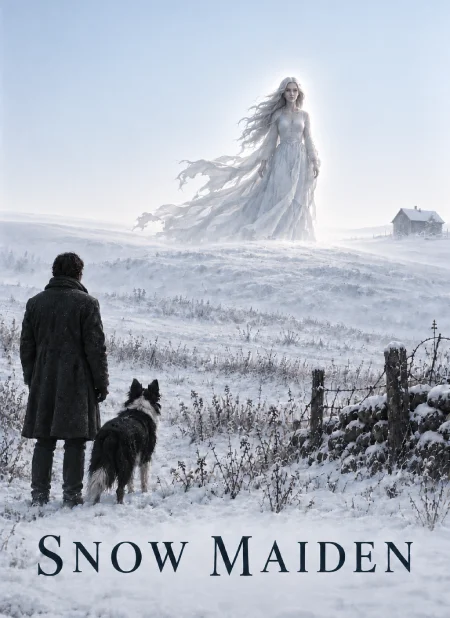

 22 min read
 Part 2
She jumps from one teller to the next, never letting the bath go cold. A pun if you’ll bear with me.
Now, from what I understand, she’s a country gal and avoids the bright lights. She’s hailed into being wherever the grass is green enough, where there’s an abundance of supernatural stories, or where there’s a teller in want of another tale. The same way an abundance of prey draws predators.
Over in Eyke, if you know where that is, there’s White Woman Lane. Now, White Woman Lane commemorates where a mill worker was spied one winter evening and reported as a ghost. Some say she was only a poor woman who trundled far to work every day and returned drained, often covered head to toe in flour, looking wretched and unworldly. But them who called her a ghost were mainly well-heeled villagers who caught sight of her from a distance. You could describe that distance as both geographical and social – for them villagers being idle, they probably couldn’t tell what hard work did to a young woman.
My point is this: a story is yours to shape as you please. You can goose it up, or you can tell it straight, with no supernatural elements at all. That’s the way it’s told by them who don’t believe in ghosts, or whose politics won’t allow women to be called witches.
Same applies to the old witch bottle they dug up near Ipswich. Full of stale urine. Meant to trap a curse. Meant to keep a witch at bay. Yet to some it is nothing more than an old distiller’s bottle.
These builders happened to be working in a derelict house – oh, we’re talking a couple of decades back maybe, maybe more – and they happened upon an ancient witch bottle buried under the cellar. Glazed with a dark brown finish. A short neck, and a bulbous body. An uneven shape of bottle, the sort some say points to glassblowers of the seventeenth century. There’s no marking on it, but that might have been the distiller’s way of avoiding taxes – by hiding the fact it was alcohol they were making.
They sent it over to Ipswich Museum, the builders, in a hurry to get back to work, worried it might prove of historical value one way or another and cause further delays, and they weren’t being paid a farthing to sit about idle.
The museum unstoppered it. But it wasn’t whiskey they found inside – it was urine. In the old days, when witches were feared, one way to protect yourself was to take something of the witch – urine, nail clippings, hair – and seal it in a bottle. The bottle would then be buried beneath the floorboards. So long as the seal held, the witch was bound, unable to harm the one who trapped her. Break it, and the curse was loose again.
In the end, it wasn’t interesting enough to delay construction any further, which relieved the builders – if you’ll pardon the pun. They were the big winners here, back to putting food on the table with the bonus of having a witch tale to laugh about and terrify their kids.
The museum got to tell a story too. The artifact may not have been valuable enough to stop construction, but it was good enough to build a historical story around.
Now that sea merchant had an angle too. He reckoned this Snow Maiden – or whatever you want to call her – is looking to start up a romance. “Perhaps she was a widow in life,” he said, “and wanders the afterlife full of grief and desire for unfinished longing.”