
 Support our Stories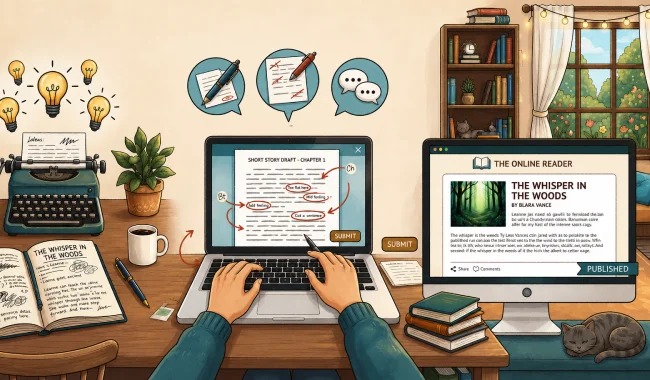
 5 min read
Anything can trigger an idea for a short story: a phrase, an image, a situation, a passing thought that refuses to go away. With just the right amount of obsession, that idea can grow into a first draft, then a sixth revision, until it becomes a story worth publishing, and worth reading by someone who finds a piece of themselves in it.
The inspiration can come from anywhere. And while it has never been easier to publish fiction online, one thing remains unchanged: a story has to be worth reading.
1. Where Every Short Story Begins: The Idea
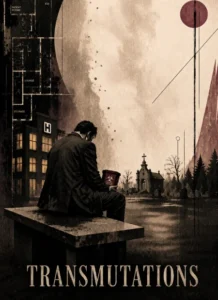
Spotlight: Transmutations – The Idea
For fiction story Transmutations, the original idea was simple: if there is no one in a couple’s life and one partner dies, perhaps the surviving spouse would logically check themselves into a mental institution.
The idea was profound, logical, and somewhat amusing. But it didn’t stay simple for long. As it developed, it became something much larger and quite different from the story that first existed in the writer’s mind.
2. The First Draft: Getting the Story on the Page
The first draft is about finding out where a story might go. It is about turning an idea into something concrete. Characters appear. Situations take shape. Scenes begin to connect. The ending may not be anywhere in sight – and how could it be when you are not even sure what the story is yet?
The first draft is about momentum: getting the idea out of your head and onto the page before it disappears. Some stories arrive almost fully formed. Others fight you every step of the way. Both are okay. A first draft doesn’t need to be good. It needs to exist.
Spotlight: Transmutations – The First Draft
The first draft of Transmutations began with a practical question: what happens to the main character after his wife dies?
The story needed a timeframe, so building it around the three days between the wife’s death and her funeral made sense. It also needed a cause of death, a believable hospital setting, and realistic procedures. At this stage, the story had no real climax, no secondary characters, and no ending.
The writing moved back and forth between developing the storyline and getting lost in the minutiae of possible hospital procedures.
That is often what a first draft is: part storytelling, part discovery, and part research.
3. Revision: Finding the Story Inside the Story
Stories reveal themselves through revision. This is where the bones begin to collect flesh. Scenes move for better flow and impact. Characters become clearer. Themes emerge. Motivations sharpen. Clichés disappear. Paragraphs that were once too loose, too poetic – or not poetic enough – become focused and precise.
Revision is also where you ask the harder questions: Does the story work? Are the characters believable? Is it saying what you want it to say? Edit, edit, and edit again.
The first draft is the incubator, and revision is where the story truly take shape. The process can be extensive. Ernest Hemingway famously rewrote the ending of A Farewell to Arms 39 times. The cleaner the story becomes, the easier it is for an editor to see its strengths.
Spotlight: Transmutations – Revisions and Editing
The main character of Transmutations was already struggling with his wife’s death, but the story needed conflict. So a young person was introduced. The two became allies but remained at odds because of their ages, perspectives, and experiences. Personal loss collided with suicidal thoughts. Mature pragmatism met youthful zeal.
Through revision, the young character became transgender. That change transformed the conflict and placed the character at odds with both the protagonist and the wider world. The significant turning point inspired the title Transmutations – the process of transformation, while also alluding to the transgender experience. Later, more subtle edit gave all the characters gender-neutral names.
None of this existed in the original idea. It emerged through writing and revision. Sometimes, you are not improving the story you started with; you are discovering the story it wants to become.
4. Preparing for Online Publication
Publishing a short story online doesn’t require industry connections or a long list of credits. What matters is the work itself. At Talking Leaves Fiction, submitted stories are considered based on the quality of the writing, voice, tone, and how well the piece fits alongside other published work. There are no guarantees, but every submission is judged on its merits.
Getting published also takes persistence. Charles Bukowski wrote hundreds of short stories, thousands of poems and six novels, facing rejection along the way before becoming one of the most prolific writers of his generation. The lesson isn’t that persistence guarantees publication. It is that rejection doesn’t have to be the end of the story.
Your story matters: Keep writing. Keep revising. Keep submitting.
5. Publication: When the Story Meets Its Readers
Submitting fiction takes care, attention, and the willingness to let your work be seen. When the story finally goes live, a little anxiety is natural: Is it good enough? Will readers understand it? Will they like it? Will anyone read it at all?
But publication isn’t really about validation. It is about connection. Once published, the story no longer belongs only to you. It belongs to the readers who discover it, interpret it, and find something of themselves in it. That is when the story takes on a life of its own.
While getting published online may feel like the end of the writing journey, it really isn’t. The first draft is where the story begins. Revision is where it takes shape. Publication is where it meets its readers.