



 Support our Stories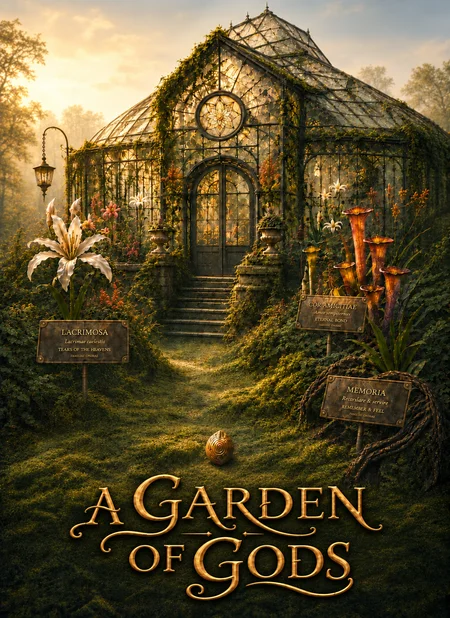

 20 min read
 Part 6
Pliny escorted Leah toward the direction of her car a little before sunset. The first old greenhouse they toured glowed amber behind them in the evening sunlight. Pliny led Leah a little off the path to one last greenhouse hidden behind several trees and a curtain of ivy. It was the smallest one of them all. When they both pushed inside, nothing was growing. The greenhouse only contained rows upon rows of small empty clay pots.
“I don’t understand this one.” Leah looked confusedly from pot to pot.
“Good.” Pliny picked up one of the small pots. “Every gardener here hopes this room stays empty. Each pot is for smaller gods that haven’t needed to grow here yet.”
“Why?” Leah picked up her own pot to examine it.
“Because they were never abandoned. They changed with the people who loved them without even really noticing. Some parts of them remained important enough to continue. The god of sitting on the porch became the god of regular evening phone calls. The god of telling stories around fires became the god of family dinners at the kitchen table. The god of borrowing sugar from a neighbour became something like the god of bringing homemade soup after a funeral. They all survive, some by a thread, because someone kept practicing them.” Pliny replaced his clay pot, looked around the space, and smiled. “Belief is fragile. Habits are astonishingly durable things. The gods that survive out there are never the most grand and marvelous ones. The gods that survive are the ones people make a little room for in their lives.”
Outside, a breeze stirred the leaves of thousands of gods while the unfinished golden tree kept growing and the unfinished greenhouse kept building itself to make space for it. Leah thought of the millions of blossoms that desperately reached for a tomorrow that would never seem to arrive. For the second time today, Leah thought about her mother. It had been eight years since she died. She hadn’t opened the recipe book she left her. Not one single time in eight years. Not because the thought of reading it hurt too much, but because there had always been the next weekend to look at it. There was always next month, or after the next conference, or after her next paper got published. She had spent eight years worshipping a tomorrow because she had mistaken postponement for preservation.
Pliny was quietly watching Leah. “They are easy to lose.” Pliny said, breaking the silence. “The little gods that never shout at you as you’re leaving them behind.”
Leah tried to let out a nervous laugh, but it caught in her throat. “I can’t remember so many things. What songs she listened to while she cooked. The colour of the kitchen walls. Which drawers had which utensils. The ingredients she used.”
“No,” Pliny said. “But you remember all those things mattered.”
Leah wiped her eyes. “Will those buds ever bloom on the golden tree?”
“They might.”
“When?”
Pliny smiled sadly. “When people stop walking toward the life they are about to live, and go home to the one that’s been waiting for them.”
Pliny wrapped his arms around Leah and hugged her tightly before turning and walking back to the first greenhouse to continue his gardening duties.
Leah got back to her car as dusk settled over the woods. As she reached into her pocket for her keys, her fingers closed around something small that wasn’t there before. Something no larger than a fingernail was wrapped in thin paper. Leah opened it to reveal a small seed with veins spiraling inward like a fingerprint. The paper had Pliny’s thick, bold handwriting:
“Plant whatever you refuse to outgrow. Come back any time. We could always use more gardeners.”
Leah smiled at the note and stared at the seed for a few minutes before she took out her phone. She opened her notes and started typing.
“Two cups of flour.”
She stopped and closed her eyes. This was the only ingredient she could remember at first. Her mind started growing a structure that resembled the old kitchen, and then her mom standing in it. She typed in another line. Then another ingredient. Then amounts of time to let things rest and temperatures to let things reach. It wasn’t enough information to actually bake the bread her mom used to make, but it was enough to at least get started. As she remembered more and typed more, she briefly thought that maybe perfect remembrance wasn’t the point of this place and the life forms in the greenhouses. Maybe the important thing was simply having things a person was willing to practice remembering from time to time.
She pulled the seed out of her pocket and let it rest in her palm as the last light of the day disappeared behind the trees. She could have sworn she felt it tremble slightly, and then she was overwhelmed by the sense that something inside of it decided it still belonged in this world. When she rewrapped the seed in the paper, she noticed smaller text on the other side.
“The God of Bread That Only Mom Could Make.”