
 Support our Stories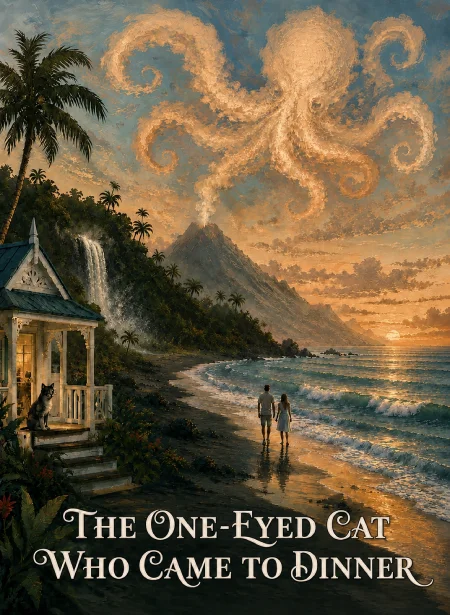

 15 min read
 Part 1
With their souls bent, their minds fractured, too heartbroken for a conversation and too injured for understanding, they needed to mend the life they had so desperately as it shattered between them. And so, to revive the heart of that life, they chose to travel. The journey displaced them. First, a cancelled flight cost them a plane and a day. Then a replacement flight carried them to Grenada instead of the island. Finally, an empty giant transatlantic plane, chartered just for them, took them to their volcanic island in precisely twenty-seven minutes. They were the only people to disembark, and the last people at the dark airport, where they learned their luggage landed in Washington, D.C., half a world away.
They were the last to pick up the rental car in the stifling, sultry night.
“Just take the highway and drive straight for about an hour, and continue straight through the roundabout and, once in town, through the three streetlights straight still, and then left at the row of blue shark teeth in the road. Then you’ll arrive on your left – just listen for the surf. Be patient with the road. Don’t use the phone maps or you’ll surely be lost,” the rental agent cautioned.
And so, in the pitch-dark night under the umbrella of light rain, they drove on the side of the road that felt wrong but was law. They drove down the single, narrow, wet road pitted with gravel and potholes like fractures in the earth itself. The rain made the pavement black and nearly invisible. They couldn’t see they were driving through a deep, lush jungle. The car meandered, swerved, and cut through sharp mountain passes and deep vales, all hidden in the thorough darkness lit only by dim headlights and solitary streetlamps. They drove in thorough silence highlighted by rain on the windshield and by periodic exclamations of, “Watch out, a pothole! Slow down,” and “I see it,” as they swerved along an invisible road on an island where forty miles could take three hours or more around the invisible volcano.
They arrived at midnight. They fried eggs for supper, and they slept listening to the ocean waves crashing against the black volcanic sand outside their window. Once asleep she stopped grinding her teeth and he started to grind his.
They awakened with the sunrise. The surf outside their window continuously crashed against the land, instilling the scraping of the sand into their minds. They were resolved to mend the chasm between them, the ever-present scar, but before sawing that chasm shut, they had to thaw their pain. He swam in the shimmering ocean beyond the surf, and she read poetry on the balcony in the bright sun with palm trees swaying. The poet – you so-good Mahatma-poet, you, Walcott D. – the poet who roamed this very edge of land, this very sand, and maybe their very cottage, who seemed to pluck the island’s paintings from his eyes and iron them onto white, talking leaves, a Herbarium of landscapes and souls.
When he tired in the water, he returned to the cottage. The setting ochre sun poured in through the window, and they spoke and cried. Their words were blunt, their sentences short and heavy. Sometimes they cried before they spoke because pain from the cuts and rips in their souls overruled all the reason their frontal lobes could muster. The leftover brain – the limbic and the reptilian – commanded the years of self-inflicted pain that rocked their souls like ships in storms of madness, carrying them to be shipwrecked. They cried, and the surf outside continued to mute the world around them.