
 Support our Stories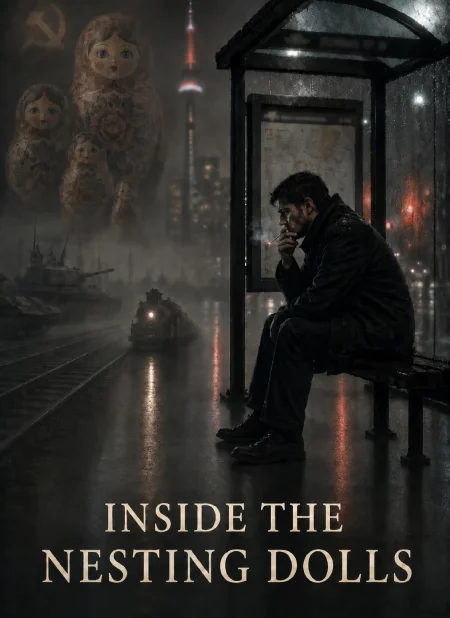

 10 min read
 Part 3
He remembered little before 1989. He remembered torn, sun-bleached Russian flags hanging next to Czechoslovak flags in front of office buildings. Slovaks managed by Prague, reporting to Moscow. In school hallways hung pictures of Lenin and Marx, and paintings of the revolution, and Aurora – the ship that signaled the attack on the Winter Palace in October 1917, the attack that began the Great October Socialist Revolution, the founding moment of the Communist empire. Stefan never learned to decode the Cyrillic alphabet on the Russian posters, because children studied Russian as the second language from the fifth grade on. He was too young.
He remembered marching with a paper lantern at sundown to celebrate the end of the Second World War. Bonfires burned in the fields. Someone played an accordion in the dark, and someone sang Russian songs. Old men dusted off war medals; the younger men dusted off the informant medals of hammer and sickle. They were all ordinary citizens of the red empire.
At seven, he swore the Pioneer’s Oath and earned the red neckerchief’s noose around his neck. He wore a powder-blue shirt and borrowed blue pants that day. It was just something you do.
He remembered Russian soldiers browsing in town, wearing their Sunday uniforms and tall, broad forage caps. Jets and helicopters flew over the mountains and towns from a nearby airstrip. Army convoys traveled the local roads, stopping the light traffic of outdated cars.
He remembered tanks loaded on trains in the rain. Their guns were covered with camouflage net, and aimed at the grim clouds as he stood on the train platform, holding his father’s hand in the blue sleeve of a railroad uniform.
Stefan was a child when the Velvet Revolution swept communism into the gutter. People told him to hate communism. The émigré artists had crawled back to celebrate the new freedom after they had played the roles of victims, after they had stretched on crosses westward of the Iron Curtain, where they sold their story, their sacred sacrilege to the devoted atheists of the West. Dubček died while people’s heads still resonated with freedom speeches. People knew Dubček would become the first post-Velvet president of Czechoslovakia. He didn’t make it, and a usurper in shorts triumphed.
The post-revolutionary masses waited. Docile, they walked in old coats, carrying their fishnet grocery bags through grey Novembers, shopping for precious western merchandise, shopping for a hope to belong. The still-figures, the people didn’t know that the handoff of prosperity wouldn’t happen. They sat in the same boat, and no one pulled the oars. November rain fell on trench coats in Madame Tussauds’ Museum of Ordinary Citizens. Little Stefan held his father’s hand in the rain and waited with them still.
Stefan stepped off the bus and walked home. He showered in the dirty tub. He dressed and ate nothing. He lit a cigarette instead, and stared into the darkness outside.
He thought of Dubček. He imagined his grandmother handing over crates of pickling cucumbers, the tanks arriving.
Socialism with a human face. Capitalism without one.
In Canada, no one told him what to read. No one told him what to say. No one followed him. No one cared. Freedom was vast and indifferent. Like paint thinner, it diluted a person slowly, one drop at a time, one doubt at a time, one fear at a time. Tanks didn’t need to arrive.
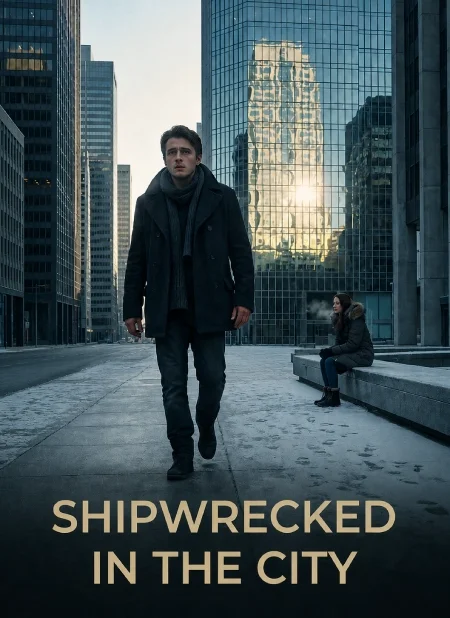
He had thought freedom would feel like fireworks. Instead, it felt like waiting at a bus stop at 8:38 p.m., smelling of paint, and exhaling its poison as it tried and burrowed in his lungs.
He remembered holding his father’s hand at the train platform while the tanks rolled past in the rain. Now he stood alone in his room. Neither had escaped.