







 Support our Stories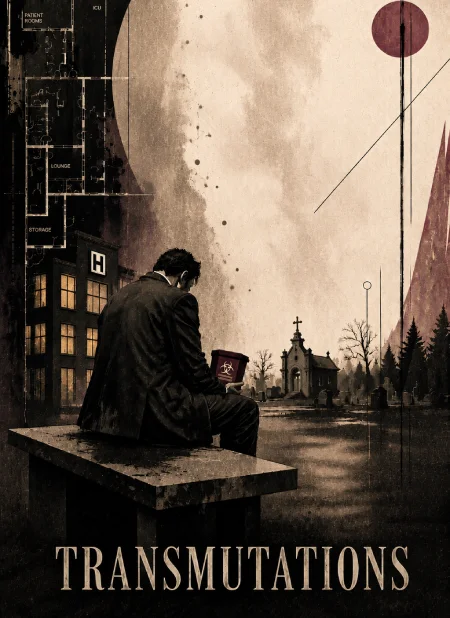

 50 min read
 Part 1
Monday, March 27
Lee passed the insurance card. The bald nurse behind the glass scanned it, and his eyes behind the reading glasses scanned Lee – a pale, strained, hollow face, a shadow of the man he had been just weeks ago. His blue shirt was wrinkled, his disheveled suit jacket hung under his arm, and he clutched a suitcase which enclosed underwear, socks, shirts, trousers, and a bottle of whisky, all grabbed absentmindedly as he left home.
“Lee Dean. Thank you.” The nurse scanned his face once more and handed back the card. The man slipped a paper wristband with his name and a barcode around his wrist.
“What’s your emergency? How can we help you?”
“My wife is dead, and I don’t have a place to go.”
“I’m sorry?”
“I have no family. The house is empty. Her body is somewhere in this hospital.” Lee looked up and pointed at the ceiling. “I have no place to go where I may consider not dying.”
“I’m sorry, sir, but this is the Emergency.”
“Apparently. Do you think I will live through the night if left alone?”
The nurse stared for two moments. “Hold on,” he said. He stood, then walked past the walls with bolted cabinets and medical implements, scraped, cracked, and worn yet shining still. He passed the glass door, turned the corner, and disappeared. Lee looked around the triage. The hospital was in the northwest corner of the Big Onion and not frequented as much as the Accession Memorial. Two security officers strolled down the corridor looking at him briefly, then stopped nearby. An older woman sat in a wheelchair under a blanket and speaking to her daughter. A teenage girl in hockey gear nursed her arm. A baby cried in the young father’s arms with the young mother beside him. The couple’s eyes were black and wide like that of deer, and their agitated bodies ready to spring, just waiting for a signal – baby’s cry, approaching nurse, a starter’s pistol – anything to move the baby’s screams forward toward a relief, toward a confirmation the child will be okay, so their parenthood – that self-inflicted PTSD – could slip back toward joy and the simpler misery of sleeplessness.
Lee’s eyes filled with tears. He cleared his throat.
“Sir?”
Lee didn’t hear.
The nurse walked around the desk and touched his shoulder.
“Sir?”
“Yes.”
“Please follow me.” The nurse led him to the examination room. “Please have a seat. A doctor will be along soon.”
“Thank you.” Lee sat down on the paper-covered bed. He hunched over the suitcase. His travel tag read: Harper Dean, North Clairemont Ave, 60618, Chicago, USA written in blue ink and careful, precise lettering like beats on sheet music. He reached over and ran his finger over those letters. They spelled “home,” they spelled “Harper,” neither of which existed as of 4:42 p.m. some mere 24 hours ago, on a Sunday.
“Mr. Dean?”
“Yes.” Lee straightened.
“I’m Dr. Sanders. How are we doing today?” The doctor pulled a chair forward to face Lee and pushed black hair back.
“You know,” Lee said, and his resigned eyes fell on the folder.
“Yes. See, Mr. Dean – may I call you Lee?”
Lee nodded without eye contact.
“Lee, I know how hard this must be. I understand you don’t have anyone to call or stay with.”
“Yes.”
“Well, the file says that you have a son. Is calling him an option?”
“He’s dead.” Lee grunted a laugh and wiped his eyes.
The doctor’s eyes welled as she looked at the solitary man in shock. “I’m so sorry. Okay. The Crisis Centre House is an option. We can arrange for you to stay there under supervision; or we can set up a personal assistant to help you at home, arrange for on-call grief counselors. Our office can arrange…”
“I thought about that. It’s best I stay here. My wife died here. She is still here.” He glanced around the room.
“I understand, but we only have 48-hour hold facilities for emergencies, and a five-day minimum voluntary admission. I can’t authorize either if there are options.”
“I’ve spent the last three months in this hospital, sleeping in your rooms and hallways. I know all the front desk staff by name. I belong here now. A few days. Just pass the funeral. Please.”
“Okay, Lee.” The doctor touched his arm. “I will consult the psychiatrist. You will have to go through an admission interview with the mental health unit and sign some forms.”