


 Support our Stories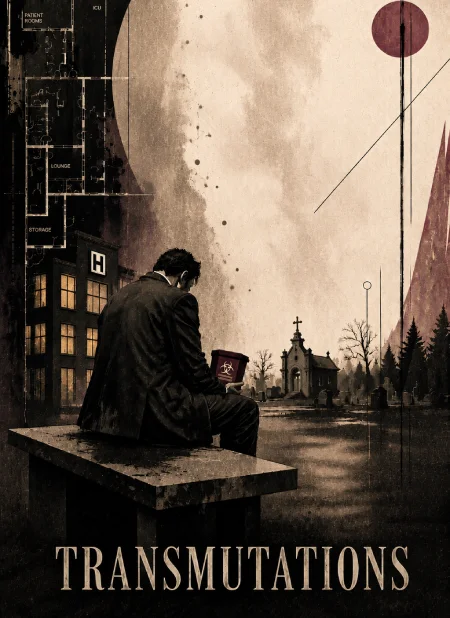

 50 min read
 Part 3
The man returned with a small red plastic box, no bigger than a box of truffles. When Lee saw it, he remembered Harper’s wish. His eyes watered. Above the biohazard label, a tag read: Harper Dean, 08/16/1967, Intracranial Tumor (Grade 3), tissue and bone, 01/12/2023.
Lee ran his finger over Harper’s name. “Is she still here?”
“Who?”
“Harper.” Lee nodded toward the box.
“I’m sorry, sir?”
“This thing…” Lee pushed the box back, “…it killed her. She’s to be transferred to the funeral home today.”
“My condolences, sir.”
“Is she here?”
“I can’t give that information. You need to inquire with the main office.”
“I’m standing right here nursing her tumour.” Lee nodded at the box. The man acknowledged Lee’s point about pointlessness.
“No. It’s not here. The body has been transferred,” exhaled the man in relief.
“That it is Harper Dean. Thank you.”
Lee walked slowly down the corridor with the red box. Inside, the red box concealed a glass jar, the glass jar filled with formaldehyde, the formaldehyde suspended a floating grey formless death mass no larger than a blueberry and shards of suspect bone.
On the main floor Lee followed the line on the floor – blue for common area. The red line for surgery joined the blue, and then the orange for ultrasound joined, and he followed them until he reached the information desk, and then he switched to the green line to spiritual sanctuary.
The door and walls arched as that of a medieval temple beneath a fake keystone. The hospital administration discontinued Jesus and replaced him with general floral patterns and impartial symbols, distilling the spiritual into something akin to a Las Vegas wedding chapel.
There he sat, and in the chair next to him in the red truffle box, perpetrator and victim together, one feeding the other, the other feeding off the one, for a time – not long-enough time. He wondered whether prayer would make a difference, and whether to pray to the artificial light behind the ornamental windows or the sinuous grey mass in the red truffle box. He used to talk to the tumour when it lived in Harper’s brain. Secretly, when she slept. He spoke softly in kind, and understanding words, and explained to the tumour that it didn’t need to be there, that it could just dissolve, transmute back into Harper, transmute into brain, blood, heart… anything but a tumour. He told it that it was time to become something better, that it was time to change. It changed not, and now he sat with his numbness which allowed for neither prayer nor tears. Why is it that rage and sadness live in a civil union? And the heart breaks as the fists smash the world around them, as Lee did time and time again, in the middle of the night, in the garage, tools flying, cabinets splintering, when the doctor said that despite their best efforts the tumour had bred throughout Harper’s body. The garage still lay untouched, uncleaned. Harper never got to see that carnage of wood, plastic, drywall, and steel.
Lee walked back to the ward, asked the nurse for a drink, and sat with a paper cup on the bed, staring out into the city until the streetlights lit and the moon rose from the lake.
***
“No! No, you uniformed drones! You want to exterminate me. NO!” The screams landed, and then the ward doors slammed shut. “No. Please. I don’t want that. Please, no,” the voice squirmed. “Don’t you touch me, don’t put that in me. Screw you! NO!”
A few metallic thuds later, the ward grew quiet again. Only the squeak of rubber wheels against the polished concrete floor rolling toward Lee’s door.
The door opened and two nurses wheeled in a sleeping body with blue hair, its chest, legs, and bandaged wrists strapped to the gurney. The nurses plugged the body into saline and a heart monitor, then left.